A garage door cable fix restores safe, even lifting after a cable snaps or slips from its drum. A broken garage door cable can leave the door crooked, heavy, or stuck. It may also strain the springs, rollers, tracks, and opener. Stop using the door and arrange a trained inspection in Utica.
Table of Contents
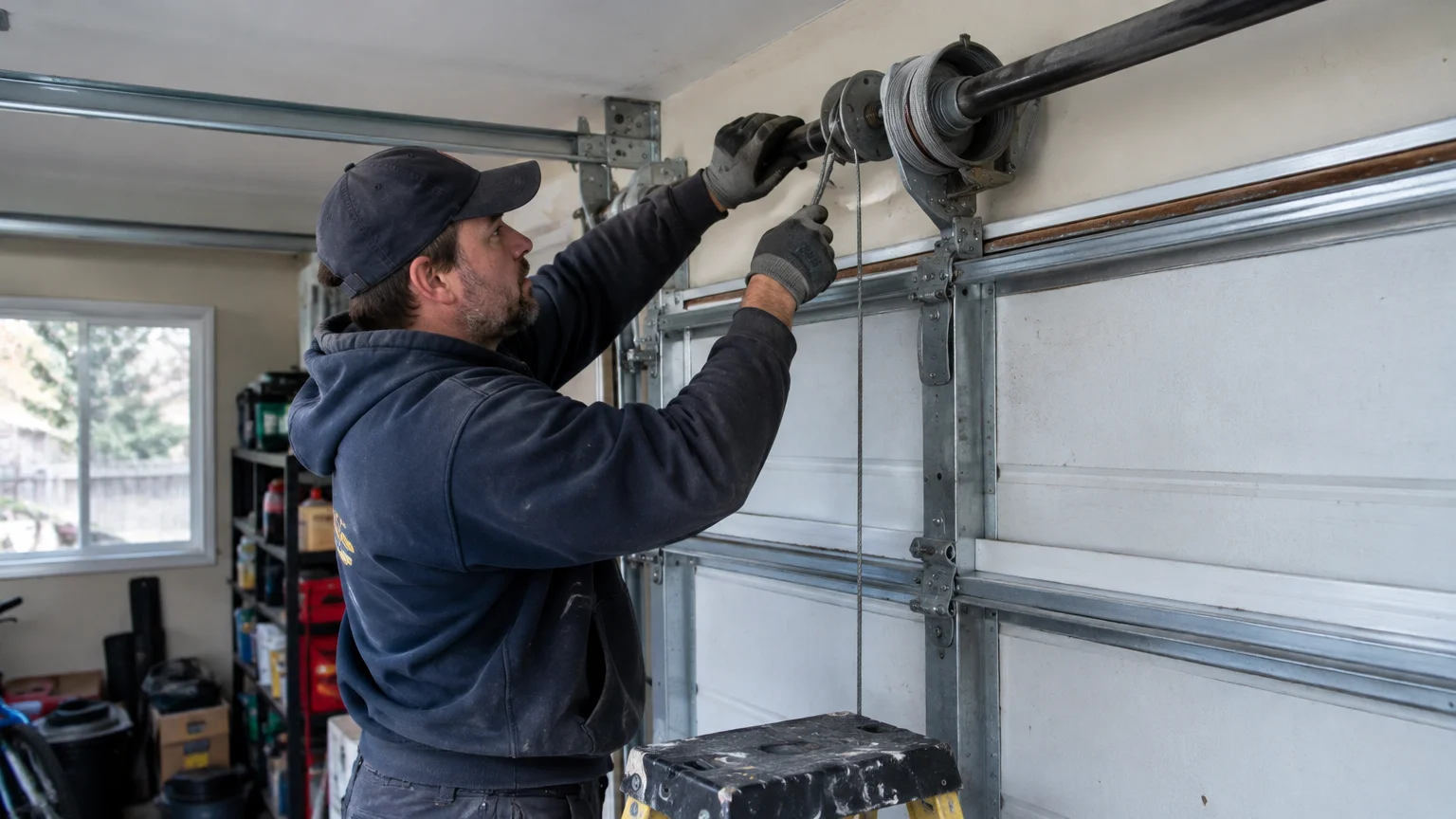
- What happens when a garage door cable snaps?
- Why do garage door cables come off or break?
- Is it safe to use a garage door with a broken cable?
- How can you tell whether the cable or another part failed?
- Can a garage door cable be repaired without replacing other parts?
- Why is a garage door cable fix not a DIY job?
- How can you prevent another garage door cable failure?
- Frequently Asked Questions
What happens when a garage door cable snaps?
A snapped cable can make one side of the door lose support. Garage doors use lift cables to move spring force to the bottom corners. When one cable breaks or slips, the door can become uneven at once. It may stop halfway, lean to one side, or stay partly open.
How a broken cable affects the door’s balance
The cables work with the springs, drums, and tracks. Each side should rise at nearly the same speed. A damaged cable breaks that balance. One side may lift while the other stays low. This can twist the door and place force on parts that were not made to carry the full load.
A door may look only a little uneven at first. That small change still matters. The panels may rub against the track. Rollers may bind. The opener may keep pulling even when the door is not moving right. This can harm the opener, bend a track, or crack a panel.
The bottom section may also drop lower than normal. It may rest on the floor while the other side stays raised. Never try to fix this by pulling the door by hand. The other cable and spring may still hold stored force.
Why the door may hang crooked or stop moving
A crooked door often means one side has lost cable tension. It may also point to a damaged drum, worn spring, broken roller, or bent track. A door that will not move can have a cable problem, but a dead opener can cause similar signs. The visible issue does not always show the first part that failed.
Utica Garage Door Repair can help Utica homeowners find the cause before more parts suffer damage. A proper check covers the full lifting system, not only the loose wire. This matters in Utica, where heat, moisture, and daily use can affect garage door parts.
Why do garage door cables come off or break?
Garage door cables often fail because of wear, poor alignment, damaged hardware, or a spring problem. A cable may fray slowly before it snaps. It can also jump from the drum when the door becomes uneven or someone tries to lift it after a spring failure.
Common causes of cable failure
Cables move each time the garage door opens and closes. Over time, their strands can wear at bends, contact points, and drum edges. Rust can weaken the strands. A loose cable may wind unevenly and form a lump on the drum. That lump can push the cable away from its normal path.
Common warning signs include:
- Frayed strands near the bottom bracket or drum
- Rust, kinks, broken wires, or flat cable sections
- A cable hanging loose beside the track
- Uneven gaps between the door and the floor
- Scraping, popping, or grinding during movement
- A door that becomes harder to lift or close
A cable can also come off after someone forces a stuck door. This may happen when a person pulls down while the opener stays connected. The cable may lose its proper wrap, especially when another part has already failed.
How worn springs and damaged drums contribute
The springs provide the force that helps lift the door. When a spring weakens or breaks, the cables may carry unusual loads. The drums guide the cables as they wind and unwind. A bent, worn, or poorly placed drum can make the cable rub, bunch, or slip.
The cable is often the first part people notice. It may not be the first part that failed. A complete garage door cable repair checks the springs, drums, bottom brackets, rollers, hinges, and tracks. Finding the source helps keep a new cable from failing soon after it is installed.
Is it safe to use a garage door with a broken cable?
No. A garage door with a broken, loose, or off-track cable should stay closed and unused until a trained technician checks it. The door can shift without warning. It may fall, twist in the tracks, or place heavy strain on the opener and other parts.
Safety risks for people, vehicles, and property
A home garage door can be heavy enough to injure someone or damage a vehicle. A cable problem makes the load less stable. One corner may drop while the other stays raised. The door can also leave the track if someone keeps pressing the wall button.
The opener does not make a damaged door safe. Continued use can make the problem worse. The opener may overwork, damage its drive parts, or pull the door into a bent track. A damaged door can also leave a home or business less secure.
Keep children and pets away from the door area. Do not stand under a raised door. Do not place a vehicle beneath it. Avoid touching the cable, bottom bracket, spring, or drum because these parts may hold force even when the opener is off.
What to do before a technician arrives
Stop using the wall switch, remote, and keypad. Keep the area clear. If the door is open, do not try to lower it by force. If it is closed, leave it closed unless a trained professional gives different advice. Do not remove brackets or disconnect hardware.
You can look from a safe distance and note what changed. The cable may hang beside the track, or one side of the door may sit higher. A clear description helps the technician prepare. Replacing a remote battery is safe when the door is not damaged, but do not test a damaged door by running it again.
How can you tell whether the cable or another part failed?
A loose cable, broken spring, damaged track, and failed opener can cause similar signs. The clearest clues come from what the door looks and sounds like before anyone touches it. A trained inspection is still needed because more than one part can fail at the same time.
Signs of a snapped, loose, or off-track cable
A snapped cable may hang in a loop near the bottom corner. An off-track cable may look loose, crossed, or unevenly wound around the drum. The door may tilt, bind, or leave one side higher than the other. A cable may also show broken strands or rust before it fully fails.
A cable issue often affects the door’s balance. The door may move partway and then stop. It may make rubbing or scraping sounds on one side. The bottom seal may no longer touch the floor evenly. These signs call for Garage Door Cable Repair instead of repeated opener tests.
How cable problems differ from spring and opener problems
A broken garage door spring often leaves the door very heavy. The opener may hum but fail to lift it. A cable problem more often creates a crooked door, loose line, or cable hanging beside the track. A damaged track may cause rubbing, binding, or visible bends.
A failed opener may affect the motor while the door stays balanced when moved by a trained professional. However, a homeowner should not disconnect the opener and test a damaged door. The door could fall or move without control. Garage Door Opener Repair may be needed, but the cable and spring system should be checked first when the door is uneven.
Can a garage door cable be repaired without replacing other parts?
Sometimes, a damaged cable is the only part that needs replacement. At other times, the cable failed because a spring, drum, roller, track, or bottom bracket already has a problem. The answer depends on the full lifting system, not only the visible cable.
When cable replacement may be enough
A cable replacement may solve the issue when the cable is worn or snapped but the drums, springs, tracks, and brackets remain sound. The replacement must match the door system and fit the hardware. The cable also needs the right path and even tension on both sides.
A new cable should not hide a larger problem. If the old cable frayed because of a sharp drum edge, that edge still needs attention. If the cable came off because the spring failed, the spring problem must be addressed too.
The repair should leave the door balanced and moving smoothly. It should not leave one side tight and the other side loose. A technician checks movement, alignment, and safety response after the repair.
Why springs, drums, rollers, and tracks must be inspected
Springs hold stored energy. Drums guide the cables. Rollers keep the door sections in the tracks. Bottom brackets connect the cable to the door. These parts work as one system. Damage in one area can place extra force on another.
Garage Door Off Track Repair may be needed when a cable failure pulls the door out of line. Garage Door Maintenance can help find wear before it becomes an urgent failure. A trained repair plan helps protect the door and shows which parts need attention now.
Why is a garage door cable fix not a DIY job?
A garage door cable fix is not a safe DIY task because cables and springs can hold strong stored force. A mistake can send a cable, bracket, or tool across the garage. It can also let the door fall or damage the tracks, panels, and opener.
How stored spring tension creates serious hazards
Torsion springs sit above the door. Extension springs run along the upper tracks on some door systems. Both types can hold energy while the door appears still. Lift cables connect to parts near the bottom corners, where a slip can cause sudden movement.
Homeowners can safely keep the area clear, stop using the controls, and look for visible signs from a safe distance. They can clean dust from the floor and replace a remote battery when the door itself is not damaged. They should not wind springs, adjust cable tension, remove bottom brackets, or reset cables on drums.
What a trained repair process typically includes
A trained technician first secures the work area and studies the door’s condition. The inspection may cover cable strands, drums, springs, brackets, rollers, hinges, tracks, panels, and opener parts. The technician then explains the fault and the repair needed.
The work depends on the door design and damage. It may include replacing a cable, fixing alignment, repairing a track, or addressing a failed spring. The technician uses tools and methods suited to the system. Afterward, the door should be checked for smooth movement, balance, and safe operation.
Do not follow online instructions for spring or cable tension work. A guide can explain the risk, but it cannot make a dangerous repair safe for an untrained person.
How can you prevent another garage door cable failure?
Regular checks and simple upkeep can help find wear early. Prevention does not mean adjusting springs or cables at home. It means watching for changes, keeping the door area clear, and arranging service before a small defect affects the whole system.
Maintenance checks that identify wear early
Look at the cables from a safe distance when the door is closed. Watch for rust, fraying, kinks, loose loops, or uneven winding. Notice whether the door sits level and whether the rollers move without scraping. Keep the tracks free of stored items, toys, and other obstacles.
You can wipe dust from accessible surfaces and keep water from pooling near the bottom of the door. Lubrication should follow the door maker’s guidance. Do not spray products on springs, cables, or drums unless a trained technician says they are suitable.
Useful signs to report early include:
- New grinding, popping, or snapping sounds
- A door that closes unevenly or reverses often
- A gap below one side of the door
- A cable that looks loose or rough
- An opener that strains or stops during travel
When to arrange professional garage door service
Arrange service when the door becomes noisy, uneven, heavy, or slow. Early attention may help prevent damage to panels, tracks, and opener parts. Urgent help matters when a cable snaps, the door is stuck open, or the garage cannot be secured.
Utica Garage Door Repair serves homeowners, business owners, and property owners and nearby communities. Its team can help review a cable concern before the door causes more damage. Deerfield Heights, Deerfield, New Hartford, Whitesboro, Ilion, and Holland Patent are among the nearby areas that may need help with a failing garage door.
Key takeaways
- A snapped cable can make the door crooked, heavy, or stuck.
- A broken cable can strain springs, drums, rollers, tracks, and the opener.
- Do not run or lift a door with a loose or broken cable.
- Safe homeowner tasks include visual checks and keeping the area clear.
- Spring, cable, and bottom-bracket work belongs with trained professionals.
Frequently Asked Questions
Can I open my garage door if one cable is broken?
No. A broken cable can leave the door unbalanced and unstable. Running the opener may bend the tracks or damage the motor. Lifting the door by hand may cause it to fall or twist. Keep people and vehicles away, leave the controls alone, and arrange a trained inspection before using the door.
What causes a garage door cable to come off the drum?
A cable may come off because of fraying, a damaged drum, poor alignment, a broken spring, or forced door movement. It can also unwind unevenly when the door becomes crooked. The visible cable may not be the first failed part, so the full lifting system should be checked before the cable is reset.
Can a garage door cable be repaired instead of replaced?
A damaged cable is usually replaced rather than patched. The work may also require attention to the drum, spring, bracket, roller, or track that caused the failure. The correct choice depends on the cable’s condition and the door system. A technician can confirm the needed work after a complete inspection.
How long do garage door cables last?
Cable life depends on door weight, use, moisture, alignment, and the condition of nearby hardware. There is no safe single lifespan for every door. Regular checks can reveal rust, broken strands, and uneven winding early. Any visible damage means the door should remain unused until a professional checks it.
Is a garage door cable fix urgent?
Yes, especially when the door is open, crooked, or blocking a vehicle. A loose cable can worsen each time the opener runs. It may damage the door or leave the property less secure. Stop using the system and seek prompt Garage Door Cable Repair from a trained provider in the local service area.
Conclusion
A snapped cable affects much more than one thin line beside the track. It can change the door’s balance and strain the springs, drums, rollers, panels, tracks, and opener. The safest response is to stop using the door, keep the area clear, and arrange a full inspection.
Utica Garage Door Repair helps property owners understand cable failures and choose the right next step. With prompt attention in Utica, a small warning sign may be handled before it becomes a larger access or security problem.
Contact us today to arrange professional help from Utica Garage Door Repair.